
The Face Makers – bespoke reconstruction
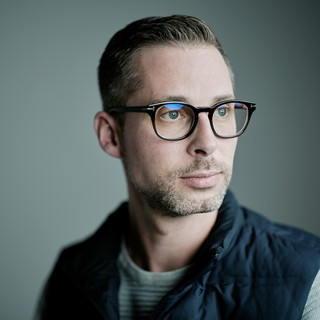
What if an accident or cancer has left someone’s face disfigured? In such cases, Prof. Dr. med. Dr. dent. Philipp Metzler and PD Dr. med. Holger Klein work hand in hand at the KSA. The interdisciplinary team, comprising specialists in oral and maxillofacial surgery and plastic surgery, helps those affected return to a normal life.

“I’m fit, young, lead a healthy lifestyle – and then something like this happens,” says Stephanie Zihlmann. What happened? In the spring of 2023, her dentist noticed that one of her teeth was threatening to break through her jawbone. He referred her to the KSA in Aarau for further investigations. Following a biopsy and a CT scan, she received the diagnosis: a tumour. “At first, I tried to focus on the positive, as it was a benign tumour,” says the 34-year-old. But she was deeply shocked when the extent of the treatment became clear. A large part of her lower jaw, including her teeth, had to be removed and reconstructed; even the nerve had to be replaced.
Facial reconstruction – a specialist discipline at the KSA
Prof. Dr med. Dr dent. Philipp Metzler, Senior Consultant in Oral and Maxillofacial Surgery, and PD Dr Holger Klein, Senior Consultant in Plastic and Hand Surgery, treated Stephanie Zihlmann. The two work together when faces are disfigured as a result of accidents or tumours. “The mouth, jaw and face are important for eating and tasting food, for speaking, but also for facial expressions and appearance,” explains Philipp Metzler. If tissue has to be removed from a patient following a tumour, this can lead to significant functional and aesthetic deficits. Furthermore, those affected are stigmatised in society. “Our aim is to restore these people’s original quality of life on all levels as quickly as possible,” says Metzler.
In order to reconstruct a face, doctors must take into account the different types of tissue, such as muscles, bones, nerves, skin and fatty tissue. “The aim is to restore the original shape, function and appearance using tissue from other parts of the body,” says Holger Klein.
‘Everything has now healed so well that you can only see it if you know it’s there. I’m very grateful to be receiving treatment at a hospital with such medical facilities.’ STEPHANIE ZIHLMANN, PATIENT
Precisely planned and digital preparatory work
The operation is only one part of the treatment. The doctors first draw up a
treatment plan, followed by individual planning. This is time-consuming,
but offers clear added value for patients. The operations are significantly shorter, and the removal of the tumour and the reconstruction are carried out exactly in line with the
plan. As a result, post-operative rehabilitation is quicker, and the functional and aesthetic outcomes are better. In Stephanie Zihlmann’s case, the fibula now replaces the jawbone. Using digital planning, Philipp Metzler
determined the extent of the jawbone to be removed, as well as the fibula required for the reconstruction. 3D models and surgical guides enable the plan to be transferred to the operating theatre. In mid-June, the interdisciplinary team operated on the patient, removing the lower jaw and reconstructing it using the fibula. The team replaced the nerve – which was also removed and is responsible for sensation in the lower lip – with another nerve from the lower leg. The procedure lasted eight hours.

After a week, Stephanie Zihlmann was able to leave hospital. The physiotherapy practice in her local area, which she attended following her lower leg operation, also has a fitness centre. “The training got me back on my feet quickly,” she says. Today, she can jump and block in volleyball again without any problems. “It’s amazing that my shinbone can support my weight on its own and I have no limitations,” she explains. That was what had worried this fitness enthusiast the most.
The procedure is barely visible
Whilst she has a noticeable scar on her leg, the one on her face is hidden beneath her chin and is barely visible. “It’s healed so well now that you can only see it if you know it’s there,” she says happily. Her jaw still needs a few more months to heal. After that, she’ll receive her dental implants. “The whole experience has made me more humble,” says Stephanie Zihlmann, adding: “I’m very grateful to be treated in a hospital with such medical facilities.”

A well-coordinated team
Thanks to short lines of communication and their combined, interdisciplinary expertise, the two specialists offer patients treatment plans that meet the highest standards in terms of shape,
. At KSA Aarau, the full range of services – including plastic surgery – is available under one roof. Patients really appreciate this. Holger Klein and Philipp Metzler have been working together for several years and treat between 30 and 40 patients a year. “To acquire this level of expertise, you have to engage intensively with head and neck reconstruction, both in theory and in practice, over many years,” says Holger Klein.
Published in the Landanzeiger No. 51 / 21 December 2023 by Karina Peters
Comments